Full Article Below
50 years in the making: NJ’s affordable housing crisis
According to the U.S. Census Bureau, New Jersey is the fastest growing state in the Northeast. With an estimated population of 9.5 million at the start of the year, the state has seen a 1.3% increase in population from the year prior (an increase of 121,209 residents).
While the state may be growing at exponential rates unmatched by any other, the housing industry in the state is lagging far behind. In particular, affordable housing in New Jersey has become a major concern.
According to the National Low Income Housing Coalition (NLIHC) , New Jersey is currently at an affordable housing deficit of approximately 205,063 properties in the state. For housing to be deemed affordable, the units must be available and affordable for extremely low income (ELI) households. ELI households are households whose incomes are at or below the poverty guideline, or their income is 30% of their area median income.
“We do not have anywhere near the number of places for people to live,” Colleen O’dea, a journalist for NJ Spotlight News, said. “People in their twenties, people in their thirties, so many people cannot afford to live in this state.”
In New Jersey, approximately every one in four renter households are extremely low income, that amounts for 296,565 units in the state. When it comes to this group of property renters, the financial burden rent puts on them is astronomical.
Of the 296,565 ELI properties in the state, 86% of households reported feeling cost burdened by the cost of living (spending more than 30% of their income on housing costs and utilities), while three out of four of these properties reported feeling severely cost burdened by the cost of living (over half of their income on costs and utilities).
When rounded to the nearest whole number, 75% of 296,565 is 222,424 . That is the number of households in New Jersey that are spending over half of their income on the cost of living. Add that to the 205,063 deficit of affordable rental properties available, that is almost half a million properties in New Jersey that either a) do not exist or b) are too costly to afford without severely restricting quality of life.
However, what is most shocking is the fact that in the tristate area, New Jersey’s rate of building permits has been consistent with the population growth the area has experienced within the last 10 years.
According to Jonathan Sternesky, the Director of Agency Policy and External Affairs of the New Jersey Housing and Mortgage Finance Agency, New Jersey, “relative to our peer states in the region, did not fall behind,” Sternesky said. “In fact, we stayed static towards slightly gained against what was accounting for an unexpected population growth.”
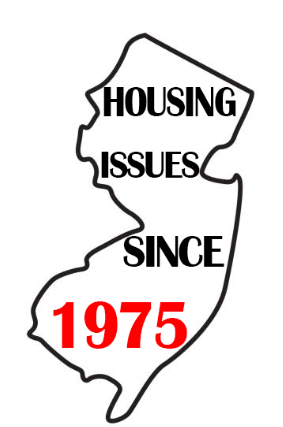
Despite the issues plaguing New Jersey today, the state did overperform in their ability to produce these building permits when compared to neighboring states. This might be due to the presence of the Mount Laurel Doctrine within the state. This landmark legislation, passed in 1975, and at the time had required New Jersey municipalities to provide their “fair share” of their region’s affordable housing.
There have been changes and amendments to the doctrine throughout the years, but a bill signed by Governor Phil Murphy last year completely revamped the doctrine. According to Murphy, the changes to the doctrine established “new processes and practices for towns to meet their Mount Laurel affordable housing obligations.” He also noted that New Jersey will be able to “more quickly and efficiently allocate funding to municipalities and support those building affordable housing in the state.”
Not all municipalities were fond of this new bill, which led to the formation of the Local Leaders for Responsible Planning (LLRP). The LLRP is a coalition of 27 municipalities in New Jersey who sued the state of New Jersey over unfairnesses present in the bill.
That court case was shot down in October this year by Mercer County Superior Court Assignment Judge Robert Lougy. However, there is a federal lawsuit filed by the LLRP regarding the law that is still pending.
According to O’Dea, the author of the previously linked article, this problem has been fought for decades by predominantly wealthy municipalities within the state. These are also communities that consist of primarily four-to-five bedroom homes with an acre plus of zoning which “doesn’t allow for people with limited means.”
“In New Jersey, I mean, your income can be pretty high to qualify as a person of limited means,” O’Dea said. “You know, more than one hundred thousand dollars, which I’m sure in other states people would think is ridiculous.
“But, it’s a high cost state and there’s just not enough places for people to live.”
While O’Dea is right about $100,000 not being enough for a single person to survive comfortably in New Jersey, this person would most likely not be able to apply for affordable housing. To qualify for affordable housing in New Jersey, a household’s income must be anywhere between 30%-80% of the average median household income within a respective municipality. So, while $100,o00 might not qualify one for affordable housing, it would put them in a precarious situation where most of their income would still be going to the cost of living.
Municipalities in New Jersey have until early next year to fully plan out zoning ordinances that coincide with the most recent Mount Laurel Doctrine. While the doctrine has mainly been successful in providing a consistent rate of new affordable housing, New Jersey’s population boom in the last decade has severely contributed to affordable housing being less accessible.
On top of that, wealthier municipalities have historically been combative to both the passing and implementation of these affordable housing acts. This contributes to regions in the state where affordable housing is almost impossible to find. These municipalities throughout the years have filed numerous lawsuits against the state for these acts, while partaking in questionable actions that delayed and hindered the implementation of affordable housing in these communities.
Ashley Lawson, a recent graduate of the Commonwealth University of Pennsylvania Lock Haven, has been scoping out houses in the Philadelphia suburbs, including both Pennsylvania and New Jersey. She described her house-searching process as “deflating,” and she believes that, “as a bonafide adult, I should not have to live with a roommate (exception would be with a long-term partner), sharing a bedroom or studio, in order to have independence.”
However, that is the issue plaguing the current generation of graduate students in the area. Graduates must either pick between living with a roommate or living with parents, with almost no chance to afford living on their own without the risk of being severely cost burdened by the price of their housing.
For New Jersey residents at least, some solace can be taken in the fact that clear efforts are being made to curb the issue. Only time will tell if more issues arise from the most recent changes to the Mount Laurel Doctrine. However, this has been a problem since 1975, and will certainly continue to be a highly contentious problem for years to come.
 Welcome To Tristan Talks